
 11
11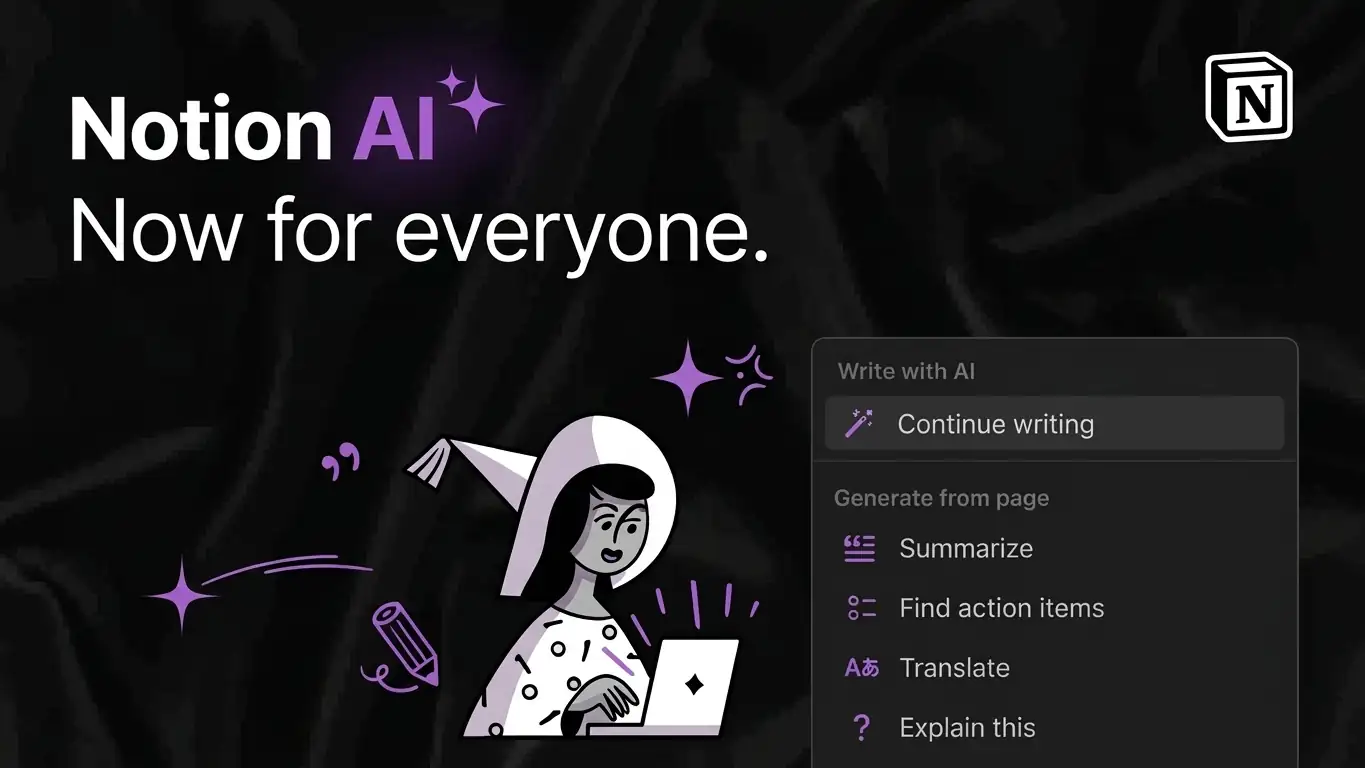
I’ve had Notion open every single day for the past two years. Notes, projects, client docs, random ideas at 11 pm all of it lands there. So when Notion started rolling out its AI features, I didn’t evaluate them from the outside. I watched them appear in my actual workflow and figured out what was sticking.
Let me tell you something I didn’t expect: the feature I thought would be most useful turned out to be the least impressive, and the one I almost ignored has quietly saved me more time than any other feature in my toolkit. That’s Notion AI in a nutshell: it surprises you in the wrong places and then earns your trust somewhere you weren’t looking.
This isn’t a press release. I’m not going to list every feature with a screenshot and call it a review. Instead, I want to walk you through what Notion AI actually feels like to use when the novelty wears off, and it becomes part of your Tuesday afternoon.
If you’ve never used Notion, the short version: it’s a workspace that tries to replace about six different apps at once. Notes, wikis, databases, project boards, docs all in one place, all connected. It’s wildly flexible, which is both its superpower and the reason some people never quite figure it out.
Over 100 million people use it now. The product started as a note-taking tool and gradually swallowed project management whole. Notion AI is the intelligence layer built on top of all that; it can see your pages, your databases, your linked content. That’s the thing that makes it fundamentally different from opening a tab to ChatGPT.
The AI is right there, inside the thing where your actual work already lives. That sounds small. It is not small.
Notion AI has a lot of surface area, but after daily use, four things stand out as genuinely worth talking about. Everything else is window dressing.
This is the one. If you’ve been using Notion for a while and have months of notes, meeting docs, and project pages accumulated in there, Ask Notion is the feature that justifies the upgrade price on its own.
The idea is simple: you type a question in plain English, and Notion AI searches across your entire workspace to find the answer. “What did we decide about the onboarding flow in March?” “What are the open action items from last week’s client sync?” “Where did I put that note about the vendor contract deadline?” It pulls from pages, databases, linked content, and even connected integrations like Google Drive and Slack.
This is the headline feature of 2026, and honestly, it lives up to the hype more than I expected. The Agent is not a chatbot. You give it a multi-step goal, and it goes off and works on it sometimes for up to 20 minutes autonomously, pulling data, creating pages, updating database properties, drafting documents.
I gave it a task: “Look at the Q1 blog content database, identify which topics got the most engagement, and draft a Q2 content plan using those as a foundation.” It scanned the database, pulled the relevant rows, made a judgment call about what “most engagement” meant from the data I had, and produced a draft plan with topic ideas, suggested formats, and rough timelines. Was it perfect? No. Did I have to edit it? Definitely. But the skeleton was there, and it saved me probably 45 minutes of staring at a spreadsheet.
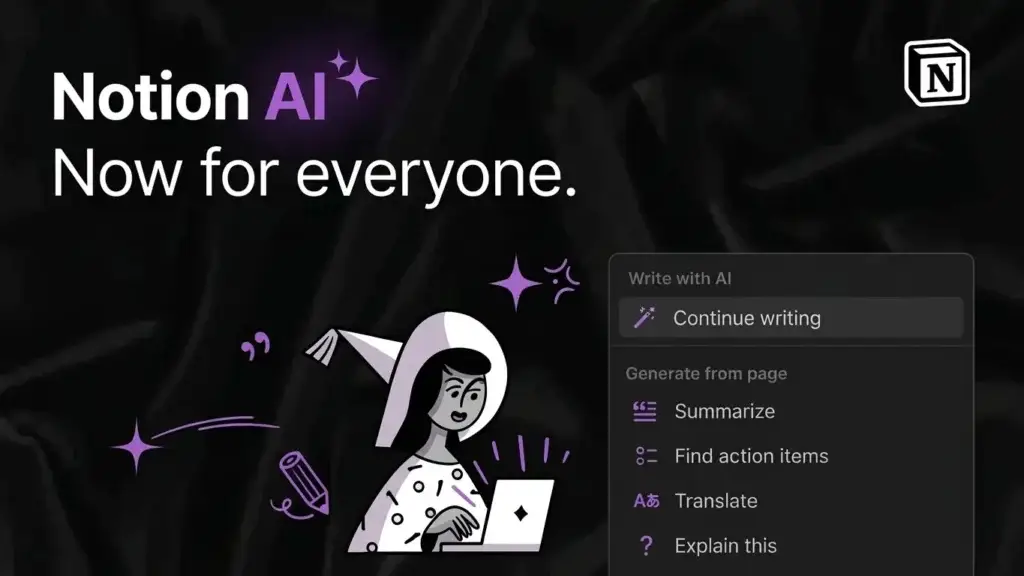
This is the one I expected to love and ended up being lukewarm on. You hit the spacebar on any page, and Notion AI shows up ready to help draft, summarize, improve writing, change tone, and translate. It works. It’ll write a solid first draft of a meeting agenda or tighten up a paragraph that got away from you.
But here’s the truth: if you already pay for ChatGPT or Claude, the writing quality isn’t better. It’s comparable at best. The advantage is that you don’t have to leave Notion to do it; you stay in context, which matters more than it sounds when you’re in a flow state. But as a standalone writing AI? It’s not going to impress you. It’s the convenience of the location, not the quality of the output, that makes it worthwhile.
One tap starts the transcription, even when you switch apps or lock your screen. It produces a summary, action items, and a shareable doc. For solo notes or async voice journaling, it’s genuinely useful. For real team meetings with multiple speakers where decisions get made, and clients are involved? It falls a bit short. Speaker attribution gets blurry, and it doesn’t capture the nuance of back-and-forth discussion well enough.
I use it for personal reflection recordings and solo project updates. For my actual client calls, I still reach for a dedicated meeting tool. Fair to say it’s a useful addition — just not a full replacement for more purpose-built meeting AI.
Query your entire workspace in plain English. Finds answers across pages, databases, and connected apps. Best feature in the whole package.
Give it a complex goal and walk away. Multi-step autonomous tasks building databases, drafting docs, updating fields. Genuinely impressive.
Invoke with spacebar anywhere in your workspace. Solid and convenient but not better than ChatGPT or Claude for raw writing quality.
One-tap transcription that summarizes and extracts action items. Works well for solo notes, less so for multi-speaker team calls.
Notion AI doesn’t run on a single model. Depending on your plan, it uses GPT-5, Claude Opus, and Gemini — and on Business and Enterprise tiers, you can actually pick which model handles which task. That’s a genuinely useful touch. If you want Claude’s nuance for a sensitive client document but GPT’s speed for a quick summary, you can switch. Most users on lower plans won’t have this control, but it’s good to know it exists.
The multi-model setup also means Notion isn’t betting everything on one provider. When a new model drops, it tends to show up in Notion quickly. That future-proofing matters more than it might seem right now.
Here’s where it gets complicated. Notion restructured its AI pricing in mid-2025, and as a result, meaningful AI features are now gated behind the Business plan at $20 per person per month. If you’re a solo user on the $10 Plus plan hoping to add AI without upgrading your whole plan, tough luck. You get a trial, and then you have to make a choice.
For a team of five, that Business plan works out to $100/month. That’s real money, and the right question is whether Notion AI saves each person enough time to justify it. If your team is already deep in Notion and switching between AI tabs constantly, the math probably works. If you’re considering Notion primarily for the AI features, I’d think hard before committing at that price point.
One thing worth noting: Custom Agents the feature that lets you build scheduled automations that run on triggers — is currently in a free trial phase through May 2026. After that, it moves to a credit model. If you plan to use this heavily, factor that cost into your decision now rather than after you’ve built workflows around it.
| User Type | Worth It? | Why |
|---|---|---|
| Teams are already deep in Notion | Yes | Ask Notion + Agents are transformative when you have rich workspace data |
| Solo Notion power users | Probably | Q&A and Agents still shine; $20/mo solo is a bigger ask but often worth it |
| People who want a writing assistant | Skip it | ChatGPT or Claude are better standalone writing tools at the same price |
| New Notion users | Not yet | AI features shine brightest when you already have a rich workspace. Build that first. |
| Enterprise teams | Yes | Enterprise search, HIPAA compliance, model control, and AI analytics make the case |
No honest review skips the rough edges. A few things that still bother me after regular use:
The AI can be slow. On complex Agent tasks, you’re waiting. That’s fine conceptually; it’s doing real work, but the feedback while it runs isn’t always reassuring. Sometimes I wasn’t sure if it was thinking or stuck.
Large databases still cause performance issues. If you have a database with thousands of rows and you ask the AI to do something with it, patience is required. This gets mentioned in a lot of reviews, and Notion hasn’t fully solved it.
The meeting notes feature needs more work for multi-speaker calls. For a company that markets this prominently, the attribution limitations feel like a gap that should have been closed by now.
And the pricing jump from Plus to Business is steep. Going from $10 to $20 per person to unlock AI is a 100% price increase. Notion knows it’s good enough to charge for it. I just wish they’d found a middle ground for smaller teams.
Notion AI is not the best AI writing tool. It is not the best meeting AI. It is not the best standalone chatbot. What it is and what nothing else currently does as well is an AI that actually knows what’s in your workspace and can act on it.
That’s the whole argument for paying. If you’ve spent time building Notion into the place where your actual knowledge lives, the AI makes that investment compound. Ask Notion turns months of accumulated notes into a searchable brain. The Agent turns complex multi-step tasks into a single instruction. That combination is genuinely new and genuinely useful.
If you’re new to Notion, or you just want a writing assistant, look elsewhere. But if Notion is already your home base the place where your projects, your notes, and your team’s knowledge actually live then Notion AI is worth taking seriously in 2026.